
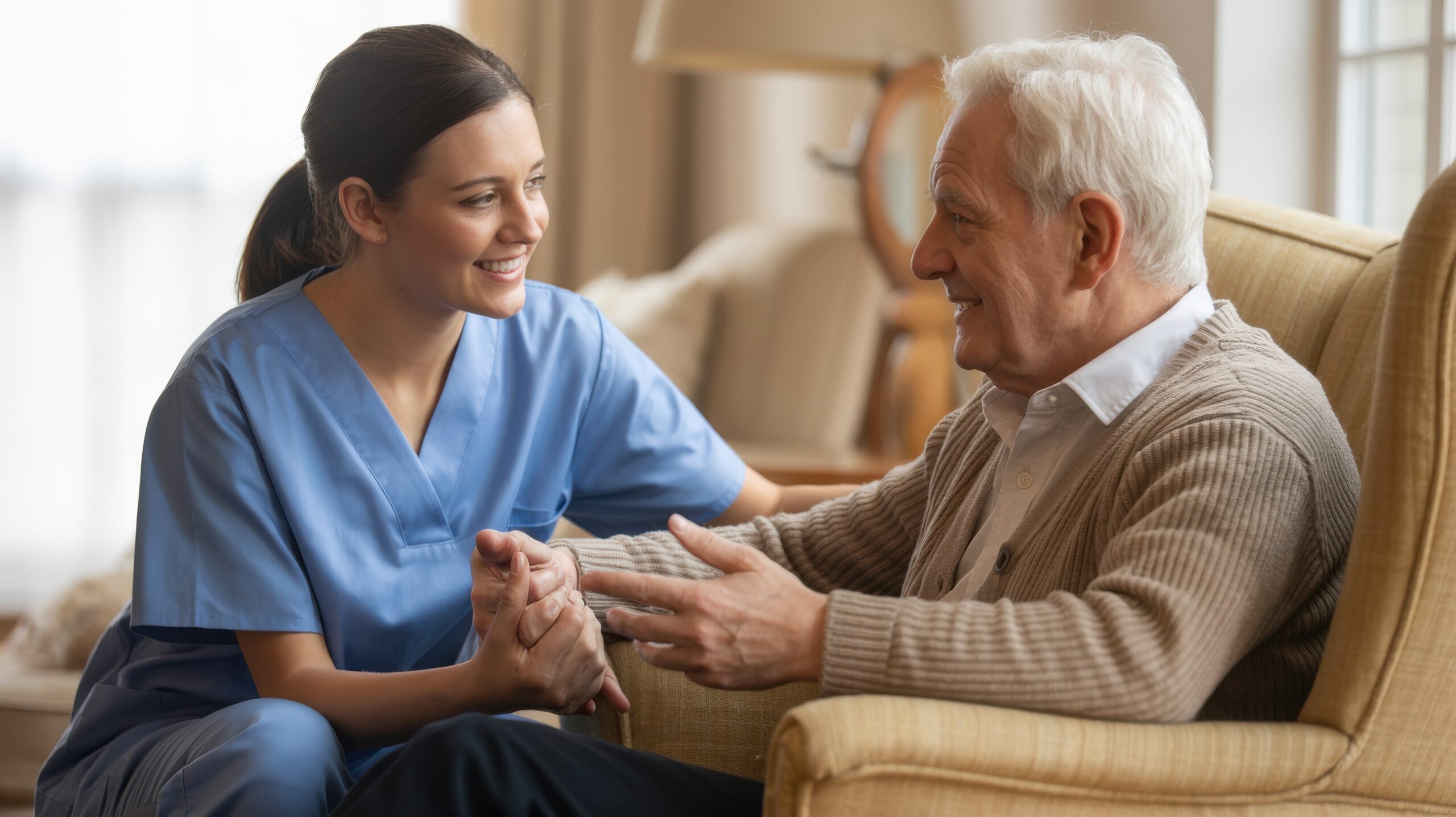
Caregivers in senior home care typically need a high school diploma, state-specific certification (such as a CNA or HHA credential), and hands-on training in areas like personal care, safety, and communication. Requirements vary by state and employer.
Qualified caregivers are the foundation of safe, effective senior home care. Understanding the qualifications and training involved helps families make informed decisions and helps aspiring caregivers chart a clear path forward.
What Are the Basic Qualifications Required for Senior Home Care Caregivers?
Most senior home care positions require:
- A high school diploma or GED
- A valid government-issued ID and clean background check
- Basic literacy and communication skills
- Physical ability to assist with mobility and daily tasks
- A compassionate, patient, and reliable disposition
Some employers also require a valid driver’s license and reliable transportation, particularly for caregivers serving multiple clients.
What Certifications Do Caregivers Need to Work in Senior Home Care?
Certification requirements vary by state and the level of care being provided. Common credentials include:
- Home Health Aide (HHA) – Required in many states for caregivers providing personal care. Typically involves 75+ hours of training.
- Certified Nursing Assistant (CNA) – A higher-level credential for caregivers handling more complex personal care needs. Requires passing a state competency exam.
- Personal Care Aide (PCA) – A more entry-level role with fewer formal requirements, focused on companionship and daily living support.
Always check your state’s specific licensing board for the exact requirements in your area.
What Training Do Caregivers Receive before Working with Seniors?
Caregiver training programs typically cover:
- Personal care skills – Bathing, grooming, dressing, and hygiene assistance
- Safety and fall prevention – Recognizing hazards and using proper lifting techniques
- Nutrition and meal preparation – Supporting healthy eating habits for older adults
- Cognitive support – Communicating effectively with clients who have dementia or Alzheimer’s
- Emergency response – First aid and CPR certification
Training may be completed through community colleges, vocational schools, or directly through a home care agency.
If your elderly loved one needs help maintaining a high quality of life while aging in place, reach out to Angel Touch Home Care, a trusted provider of Boca Raton homecare services. Our caregivers arrange transportation to and from medical appointments and social events and provide nutritious meal preparation, assistance with daily exercise, and help with everyday tasks like bathing, grooming, and light housekeeping.
What Ongoing Training or Professional Development Is Expected of Caregivers?
Caregiver education doesn’t stop after initial certification. Ongoing development is a standard expectation in the field and may include:
- Annual continuing education requirements (varies by state)
- Dementia care and Alzheimer’s training (e.g., through the Alzheimer’s Association)
- CPR and first aid recertification (typically every two years)
- In-service training offered by employers on topics like infection control and client rights
Many states require a minimum number of continuing education hours per year to maintain an active HHA or CNA credential.
Aging in place can present a few unique challenges for older adults in southeastern Florida. Some only require part-time assistance with exercise or meal preparation, while others are living with serious illnesses and benefit more significantly from receiving Boca Raton 24-hour home care. Angel Touch Home Care are leaders in the elderly in-home care industry for good reason. We tailor our care plans based on each senior’s individual needs, our caregivers continue to receive updated training in senior care as new developments arise.
How Can Families Verify a Caregiver Is Properly Qualified?
Families should take an active role in confirming caregiver credentials. Steps to verify qualifications include:
- Ask for copies of certifications and check expiration dates.
- Contact the state licensing board to confirm the caregiver’s credential status.
- Request background check documentation from the home care agency.
- Choose accredited agencies that follow state and federal caregiver training standards.
- Review agency staff training policies before signing a care agreement.
Reputable home care agencies will be transparent about their hiring standards and caregiver vetting processes.
Caring for a senior loved one can be rewarding, but it can also be overwhelming for family caregivers who have other responsibilities they need to focus on. For these families, the perfect solution is respite or overnight home care Boca Raton seniors can depend on. Families can rely on our caregivers whenever they need time to rest, work, run errands, and even go on vacation. If you need professional care for your loved one, Angel Touch Home Care is just a phone call away. Reach out to one of our Care Managers today.
Frequently Asked Questions
Do all states require home care caregivers to be certified?
+
No. Certification requirements differ by state. Some states require formal HHA or CNA certification, while others have minimal requirements for nonmedical home care roles.
How long does it take to become a certified home health aide?
+
Most HHA training programs can be completed in two to six weeks, depending on the program format and state requirements.
Is CPR certification required for senior home care caregivers?
+
CPR certification is commonly required or strongly preferred by home care agencies, and many states mandate it for HHA and CNA credentials.
What’s the difference between a home health aide and a personal care aide?
+
A home health aide (HHA) is typically certified to provide personal care under a care plan, while a personal care aide (PCA) generally offers companionship and help with daily tasks with fewer formal requirements.
Can someone become a paid caregiver for a family member?
+
Yes. In many states, family members can become paid caregivers through Medicaid self-directed care programs. Eligibility rules and payment structures vary by state.