
Sundowning in dementia can be managed at home through structured daily routines, environmental adjustments, calming activities, and consistent caregiver responses that reduce confusion and agitation during late afternoon and evening hours.
Sundowning (a pattern of increased confusion, restlessness, and agitation that typically occurs in the late afternoon or evening) is one of the most challenging aspects of caring for a senior loved one with dementia at home. Understanding and applying targeted strategies can meaningfully reduce the frequency and intensity of these episodes.
What Daily Routines Can Reduce Sundowning Episodes?
Consistency is one of the most powerful tools available to home caregivers. A predictable daily schedule reduces uncertainty, which is a key trigger for sundowning.
- Waking up, eating meals, and going to bed should occur at the same time each day.
- Schedule demanding activities such as bathing or appointments during morning hours, when energy and clarity tend to be higher.
- Incorporate gentle physical activity like a short walk during the early afternoon to promote better sleep at night.
- Avoid overstimulating environments or activities in the hours leading up to evening.
One of the most challenging tasks of helping an elderly relative age in place safely and comfortably in southeastern Florida is researching agencies that provide Boca Raton in-home care. Families can turn to Angel Touch Home Care for reliable, high-quality in-home care for aging adults. We offer 24-hour care for seniors who require extensive assistance, and we also offer respite care for family caregivers who need a break from their caregiving duties.
How Can You Adjust the Home Environment to Minimize Sundowning?
The physical environment has a direct impact on a person with dementia’s sense of calm and orientation.
- Increase indoor lighting during the late afternoon and evening to reduce shadows, which can cause visual misperceptions.
- Use blackout curtains to signal nighttime clearly once the evening routine begins.
- Reduce background noise from televisions or radios during vulnerable hours.
- Place familiar, comforting objects in common areas to provide reassurance.
- Use clocks and calendars in visible locations to help with time orientation.
What Calming Activities Can Be Used during Sundowning Hours?
Redirecting attention with purposeful, soothing activities can interrupt the escalation of agitation before it intensifies.
- Play familiar music from your loved one’s younger years, which can have a grounding and calming effect.
- Engage in simple repetitive tasks such as folding towels, sorting objects, or light gardening.
- Offer a warm caffeine-free beverage as a comforting ritual.
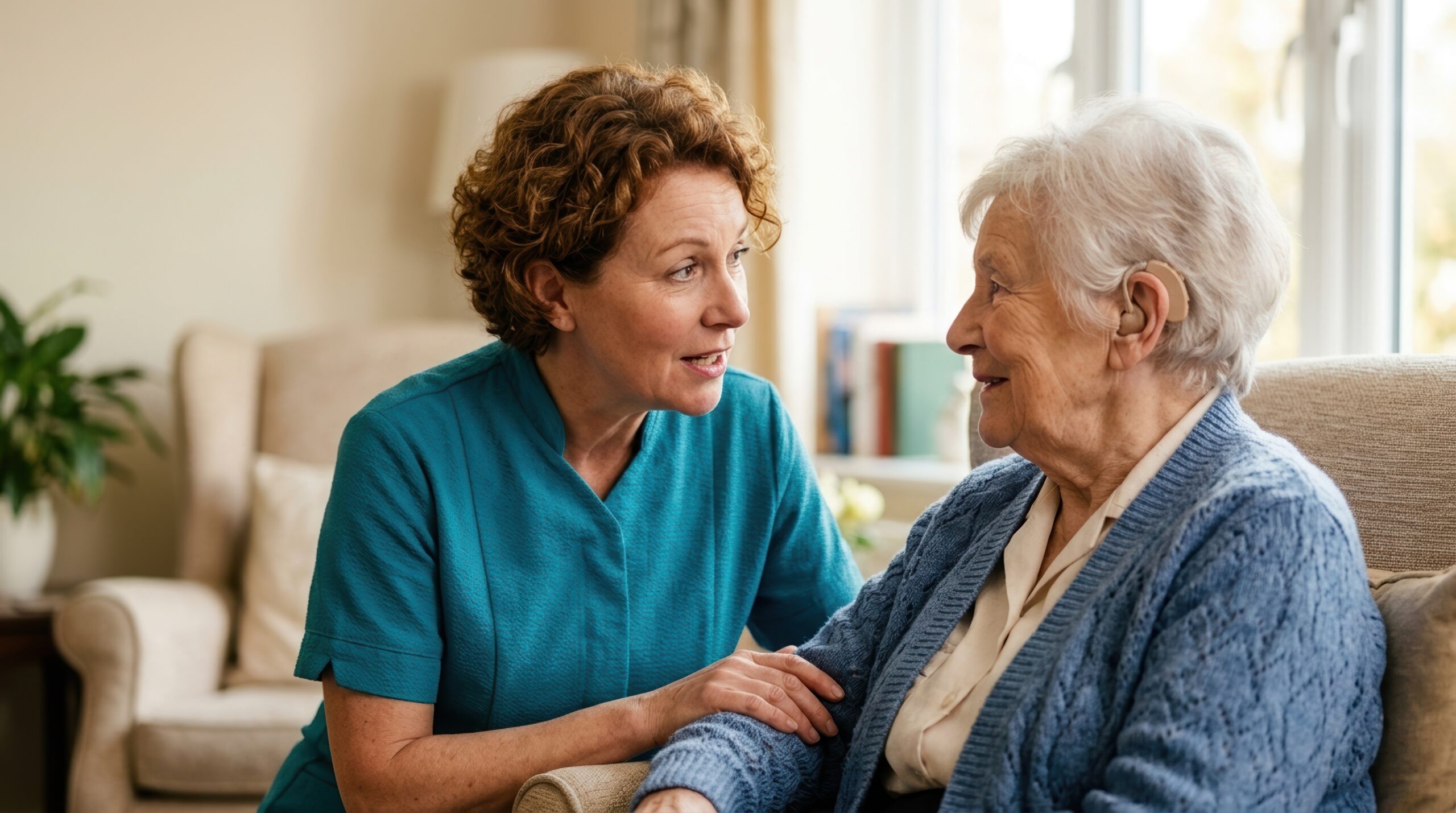
- Use gentle touch, such as hand-holding or a light back rub, if your loved one is receptive.
- Avoid activities that require complex decision-making or high concentration during these hours.
Certain age-related conditions can make it more challenging for seniors to age in place safely and comfortably, but experts in 24-hour home care Boca Raton families can rely on are available around the clock to help seniors manage their health. Whether your loved one is living with cognitive decline or recovering from a stroke, you can trust the professional live-in caregivers from Angel Touch Home Care to enhance his or her quality of life.
How Should Caregivers Respond when Sundowning Behaviors Occur?
The caregiver’s response during an episode significantly affects how quickly the person with dementia is able to calm down.
- Speak in a slow, calm, and reassuring tone. Avoid arguing or correcting.
- Validate your loved one’s feelings rather than dismissing them (“I can see you’re feeling upset. I’m right here with you”).
- Limit the number of questions asked at once. Offer simple binary choices instead.
- Avoid physical restraint or forceful redirection, as this can escalate distress.
- If agitation intensifies, step back and give your loved one space while maintaining a watchful presence.
What Lifestyle and Nutritional Factors Can Influence Sundowning?
Daily habits related to sleep, diet, and stimulant intake can either worsen or reduce sundowning symptoms over time.
- Limit or eliminate caffeine intake after midday.
- Avoid large, heavy meals in the evening, which can disrupt sleep and increase restlessness.
- Ensure adequate exposure to natural light during the morning hours to regulate the body’s internal clock.
- Limit daytime napping to short periods (30 minutes or less) to preserve nighttime sleep quality.
- Monitor for pain, hunger, or discomfort, as unmet physical needs are common sundowning triggers.
Caring for a senior loved one can be rewarding, but it can also be overwhelming for family caregivers who have other responsibilities they need to focus on. For these families, the perfect solution is Boca Raton overnight home care and respite care. Families can rely on our caregivers whenever they need time to rest, work, run errands, and even go on vacation. If you need professional care for your loved one, Angel Touch Home Care is just a phone call away. Reach out to one of our Care Managers today.
Frequently Asked Questions
What time of day does sundowning typically occur?
+
Sundowning most commonly begins in the late afternoon around 3 to 4 p.m. and can continue into the evening hours.
Is sundowning a permanent condition for people with dementia?
+
Sundowning episodes can fluctuate over time and may worsen as dementia progresses, though consistent management strategies can reduce their frequency and severity.
Can sundowning occur in people without a dementia diagnosis?
+
While sundowning is most closely associated with Alzheimer’s disease and other dementias, similar behavioral patterns can occasionally occur in older adults experiencing delirium or significant cognitive changes.
How long do sundowning episodes typically last?
+
The duration varies by individual, but episodes typically last from one to several hours, often subsiding once the person is settled into the nighttime routine.
Can changes in season or daylight affect sundowning?
+
Yes. Shorter days in autumn and winter can worsen sundowning symptoms, as reduced natural light exposure disrupts the body’s circadian rhythm. Light therapy lamps used during morning hours may offset this effect.